Axles
Making the axles is the first step for me making toy cars, and most important if you want the toys to roll smoothly. You can buy pre-made dowels. I would recommend maple, since it's readily available, generally pretty hard, and easy to find in straight grain.
In general, you'll want a diffuse-porous wood. In North America, this means one of the following woods: alder; aspen; beech; birch; hophornbeam; ironwood; live oak; madrone; mountain mahogany; maple; myrtle; or sycamore. Fruit woods, such as Apple, Cherry, or Plum will work too.
You'll also want grain as straight as you can get. Twisty grain will make life hard for you, and the axles will be weaker than you would like (which is why I generally don't use fruit woods for axles).
I've standardized on ⅜ inch (roughly 9mm) diameter for axles. It's big enough to be strong, and small enough that I'm not wasting too much wood.
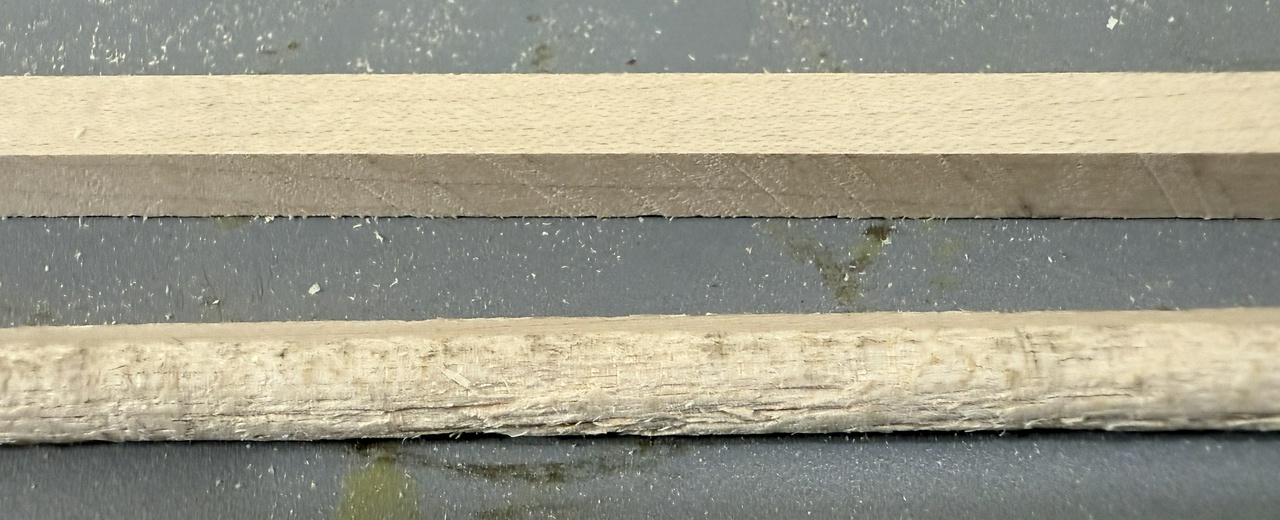
First step is rough-dimensioning the wood into square sticks. I tend to make them no longer than 30” (75mm) since that's the longest I can put into my lathe.
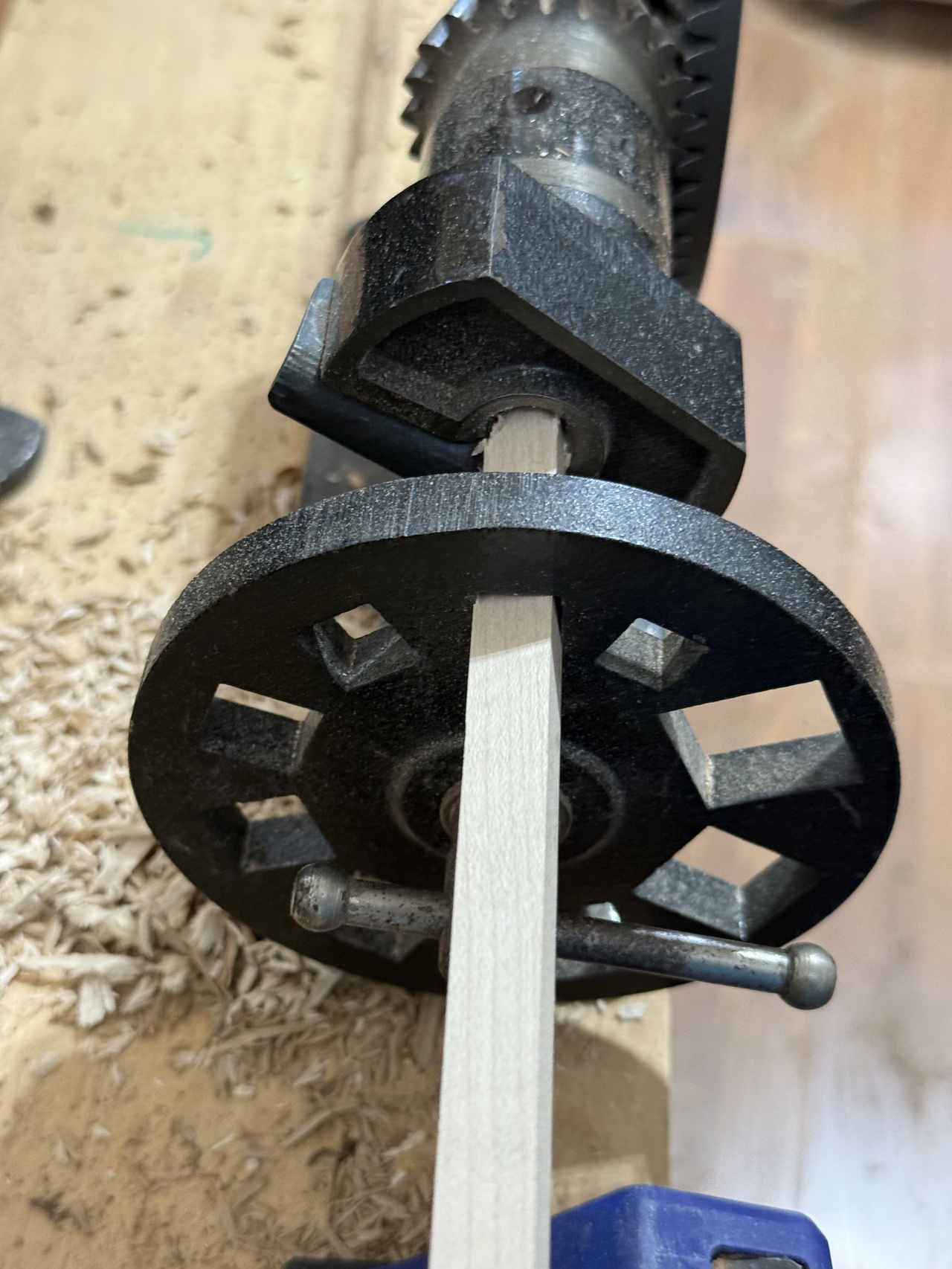
Then I run the square sticks through my Stanley 77 dowel-maker with the ⅜ inch cutter, which is set a little oversized. It produces dowels about 13/32 inch (or 1/32 inch. oversized). If you have trouble with cutting dowels, soaking them in linseed or tung oil for a while before cutting them will make them cut more easily. Just be prepared to thoroughly clean the dowel-maker if you do this, as it will get oil everywhere and you don't want that to gum up the works when it cures.
If you soaked the blank in oil, let it sit for a couple days to cure before proceeding. If there are any spots with tear-out, try to align them to the part of the axle that will be glued into a wheel, and feel free to fill it with wood filler if it makes you feel better.
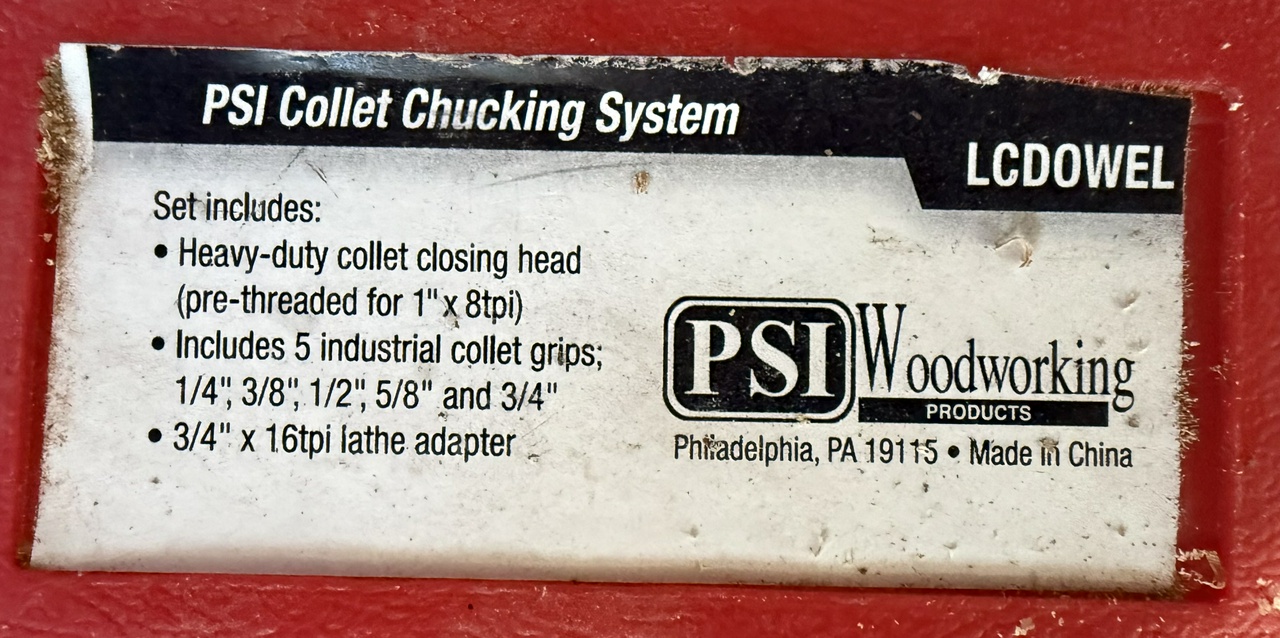
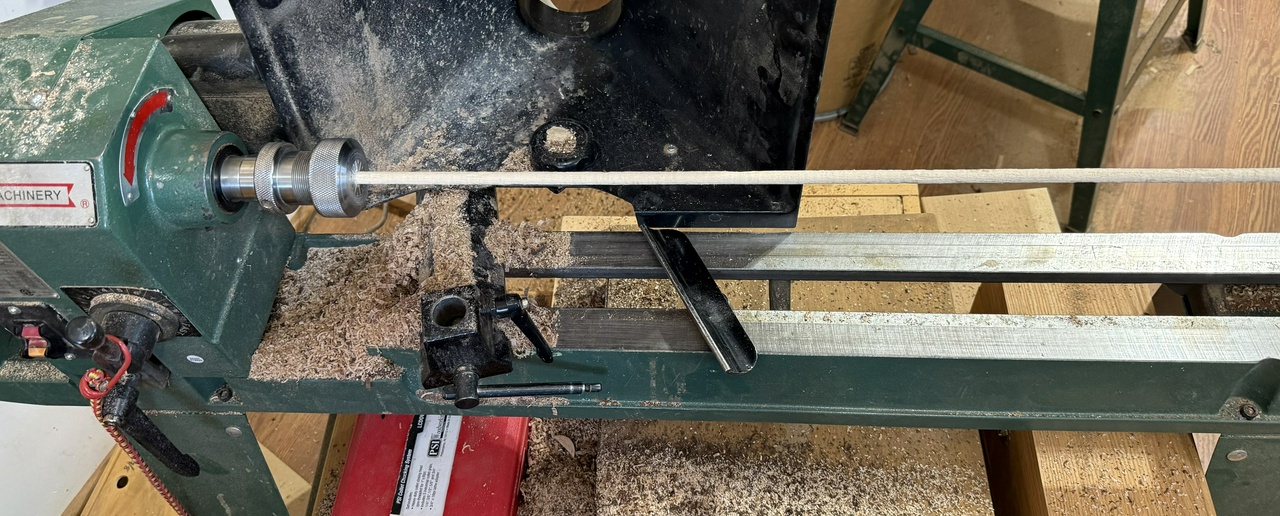
Next, I pop the rough dowel into a ⅜ inch collet-chuck on my lathe, and smooth the rough dowel with some 60 grit sandpaper, just lightly so I don't give myself any splinters. This also makes the dowel fit tightly into a hole drilled by my ⅜ inch drill bit. The dowel is either dead-on ⅜ inch at this point, or maybe 1/64 oversized.
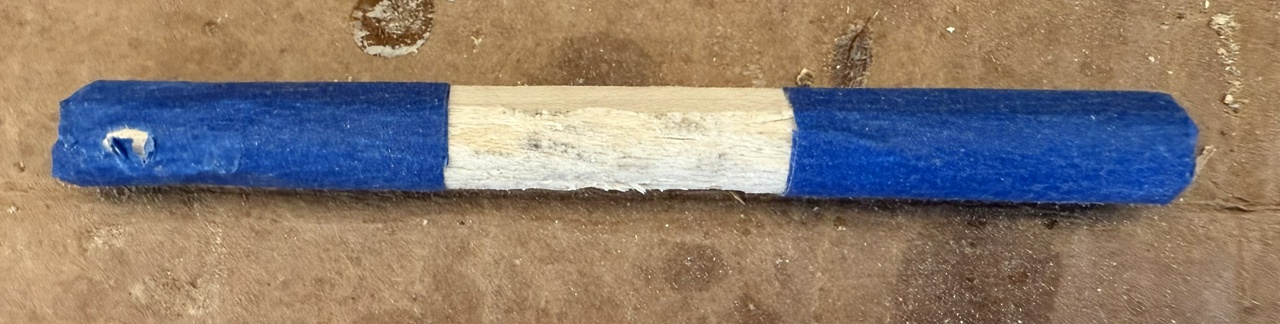
With the dowel smoothed, I cut axles to length (see more in the Assembly section), and wrap the width of the wheel on each end of the axle with blue painters tape.
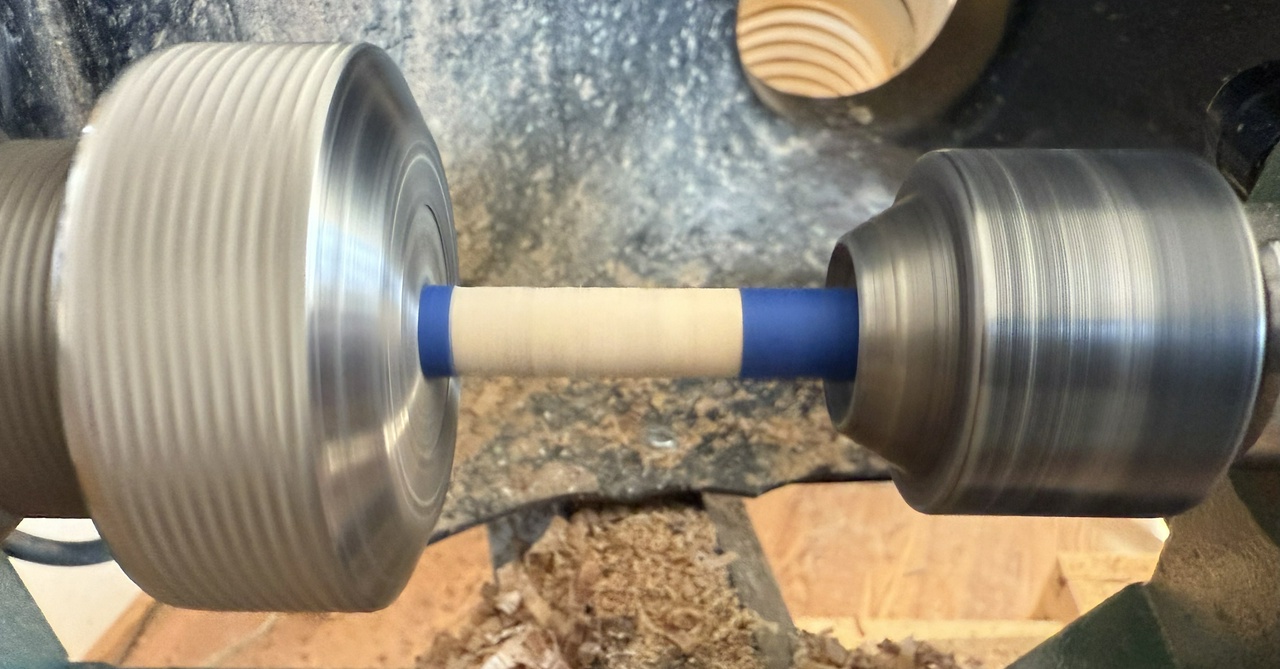
I then chuck the axle up in the collet and sand the center portion down by about 1/32, making it undersized and smooth. I work through 120, 220, and 400 grits, and then apply a small amount of paste-wax to the portion of the axle without the painters tape. The paste-wax will serve as a lubricant to keep the axle turning smoothly in the body.
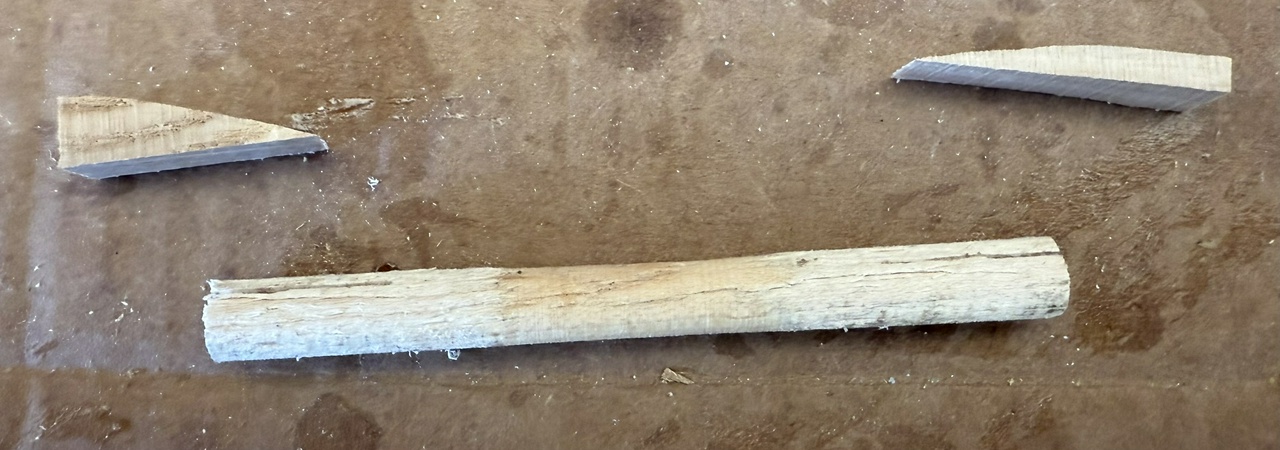
And there you are, a completed axle that will work well in a toy car.
Discuss... Or contact me in the fediverse @davepolaschek@writing.exchange